My Railroad, My Rules
I was eight years old, and I owned a steam locomotive. Not metaphorically. Not an electric train model. Not a toy that ran on a loop around my bedroom. Nope! I owned a real live working snorting moving coal-burning steam locomotive on real live railroad tracks with a real live engineer and fireman.
Her number was 476 and I was totally in love. You'll have to forgive me if I wax sentimental. She was beautiful and as far as I was concerned, she was mine.
She was actually owned by the Denver and Rio Grande Western Railroad, which operated a daily tourist train from Durango Colorado to Silverton Colorado.
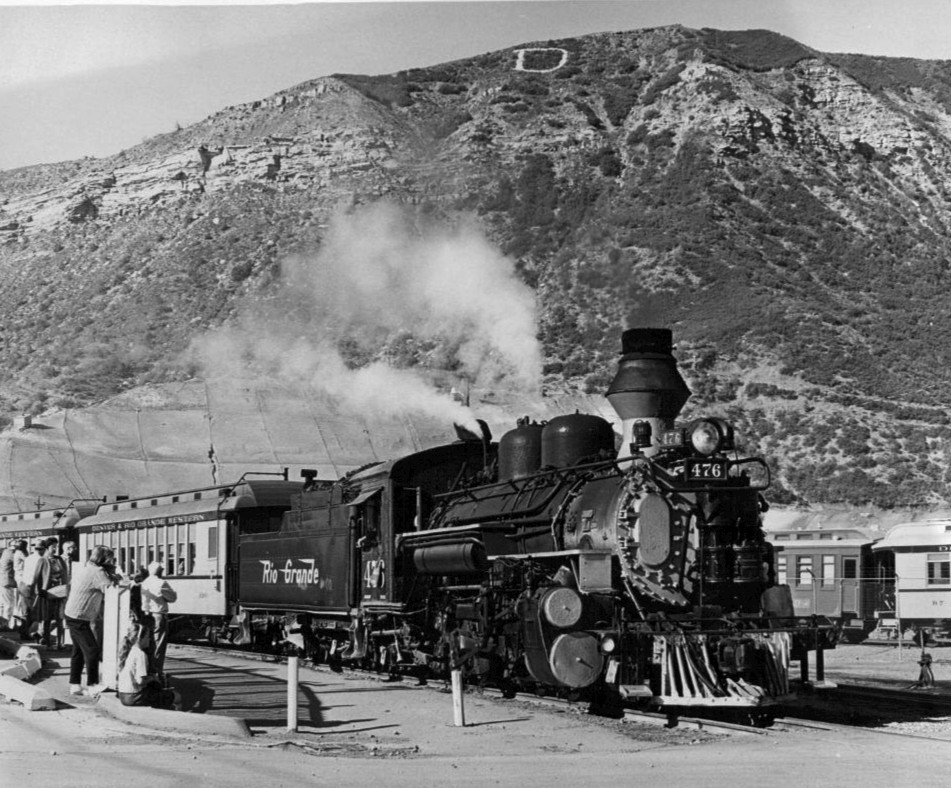
Photo by Bill Conrad. Public domain via Wikimedia Commons.

Durango was only a short Greyhound bus ride from my home and my parents brought me to ride the train three or four times a year.
I walked around the railroad yard. I looked at the passenger cars and cabooses. I waited in line to buy my ticket. I jumped up and down when the conductor punched my ticket. But most of all, I watched MY locomotive steam out of the roundhouse and couple up to the train.
I was eight, 476 was on time, and life didn't get any better.
One of my joys was waving to 476's engineer. One day he offered to let me climb up into the cab. I was understandably in railfan heaven. I was invited to the one place in the world I had always dreamed of. I climbed halfway up to the cab. Then I stopped.
And panicked. I looked at my father. I looked at the engineer. My hands trembled.
There was real fire in the firebox.
I couldn't force my feet any farther up the ladder. I was frozen, torn between my fondest wish and reality. You see, I'm deathly afraid of fire. My heart races. My mouth goes dry. My ears start to ring.
So I climbed back down the ladder. My father thanked the engineer. Then he walked me to the canteen car and bought me an ice cream bar to calm my nerves.
I got another case of the jitters 21 years later, this time in pure joy, when a new owner purchased the entire railroad and all its equipment, including 476. The Rio Grande had numerous times threatened to abandon the line, tear up the tracks, tear down the stations, cut up the locomotives for scrap metal, and ruin everything I believed in.
The purchase saved the railroad, preserved it for the future and earned a designation as a National Historic Landmark. That deserved handstands and celebration. 476 would still wait for me in Durango.
But the new owner promptly started changing things. That, I will make myself perfectly clear, was sacrilege. I had RULES about my railroad.
For instance:
- 476 was built to burn coal... period. Not cruddy slimy oil from a tank retrofitted into the tender.
- Bridges were supposed to look like bridges had always looked. Not strengthened with larger girders and shiny new rivets.
- Rails were supposed to be 65 pounds per yard, handed down from other parts of the Rio Grande. Not brand new 85-pound steel fresh from a mill in Pueblo.
- And fresh rock ballast under the ties was heresy. Ties were supposed to rest on a dirty roadbed with grass growing between the rails, just the way 75 years of history left them.
- But most of all, the train to Silverton was supposed to be pulled by 476. Not those bigger upstarts brought in from other terminals. Sure those could haul more passengers.
But come on, really! My eight-year-old's reaction was essentially: "Excuse me? Who authorized this?"
In those intervening years, I grew up. I had a family and chores. I washed laundry. Then I threw it in the dryer. Threw is the wrong word. I shoveled laundry into the dryer. I treated it as though I was feeding coal to the locomotive to make steam.
Shirts in the left heel at the rear of the imaginary fire. My wife's dresses in the right heel. Pants in the center. Socks in the left toe just inside the firebox door. Underwear in the right toe. Our clothes always came out dry and ready to fold. In a way, I felt like 476's fireman.
In my twenties, I thought 476 was done for. I was riding the train to Silverton when we stopped unexpectedly.
We waited. The train didn't start moving. We waited. There was activity near 476. A lot of train crew running around. We waited. I realized 476 had broken down. Was completely immobilized.
When the following train came up slowly behind us, a decision was made that they would tow our train backward to Durango. I remember being devastated as we rolled away from 476, leaving her stranded on the tracks behind us. My inner eight-year-old started to cry. They were deserting my locomotive.
Late that night, after we set up our tents in a campground near the railroad, I heard a whistle, as a work train headed north to rescue 476. I breathed a sigh of relief. She would be repaired. Life returned to normal.
There's still another part of that same story. In railroading, proper terminology is important. Here's an example: It's called the Law of Western Railroading; very scientific.
If something breaks, you get a hammer to bang it back together. If that doesn't do the job, you get a bigger hammer. And then a bigger hammer.
As I watched the train crew trying to make 476 run again, I heard the pounding of a hammer. Soon a crewman returned to the toolbox and got a mallet. A few minutes later, he came back for a hand-held sledge called a single jack. It's about the length of a forearm and has a large steel head.
When he finally brought out a full-sized long-handled 35-pound spike mallet, I knew for sure that 476 was not going anywhere.
I had just experienced the Law of Western Railroading in action. Even newly reinvigorated railroads couldn’t ignore fundamental universal principles.
The new railroad started running winter trains, taking tourists up the canyon to play in the snow. They never did that when I was growing up. In Rio Grande days, snow was the enemy. For ten miles south of Silverton it piled up, leaving the town marooned for weeks at a time.
The snow always heaped so high that in order to keep the line operating, they literally had to dig tunnels through the snowslides. The years had taught me that snow was snow, whether in the 1950s or 1980s.
"This is wrong," screamed eight-year-old me. "You can't take trains into the snow. Why didn't you ask me if it was even possible."
Turns out they didn't go all the way to Silverton. They stopped at a small resort that was miles south of the snowslide area. They served hot chocolate. Okay... well... I forgave them.
I told my family that I don't want a funeral. When I die, I don't need a memorial service. I don't want flowers or a grand sending-off reception.
I just want them to take my last remains down to Durango. Take the urn out into the railroad yard. There, amid the lubricating grease and a century of cinders, I want them to shake out my ashes.
I want to be eight years old again, feeling the warmth of steam locomotives passing over me. I want to hear the clanging of couplers and the scrape of coal shovels. Lay me to rest near 476 as she gets ready to pull the daily train north to Silverton.
I can't think of anything more heavenly.